Most model releases ask one question: how much smarter is it than the last one? Anthropic's June 9 release asks a different one. Claude Fable 5 and Claude Mythos 5 are the same underlying model. Identical weights, identical capability. What separates them is a set of safeguards and a decision about who gets to lift them.
That is not a footnote. It is the most useful idea in the announcement, and it maps directly onto a problem every organization adopting AI is about to face: the most capable version of a tool is rarely the version you want every user to hold.
One Model, Two Configurations
Anthropic describes a new "Mythos-class" tier that sits above its Opus models in raw capability. With that capability comes risk. The company is explicit that these models carry real potential for "uplift" to malicious actors in two domains in particular: frontier cybersecurity and research biology.
So rather than ship one model and hope, Anthropic shipped the same model twice.
Claude Mythos 5 is the unrestricted version. Safeguards in the sensitive domains are lifted, and access is limited to vetted users such as approved cyber defenders and biology researchers.
Claude Fable 5 is the public version. It runs the same model, but when a user touches a restricted topic, it quietly falls back to the smaller Claude Opus 4.8 rather than refusing outright. Anthropic reports those safeguards trigger in fewer than 5 percent of sessions, so for ordinary use the experience is uninterrupted.
The naming reinforces the point. Fable comes from the Latin fabula, "that which is told," a cognate of the Greek mythos. The words mean nearly the same thing. As Anthropic puts it, the safeguards are what distinguish the two models.
Why This Matters Beyond Anthropic
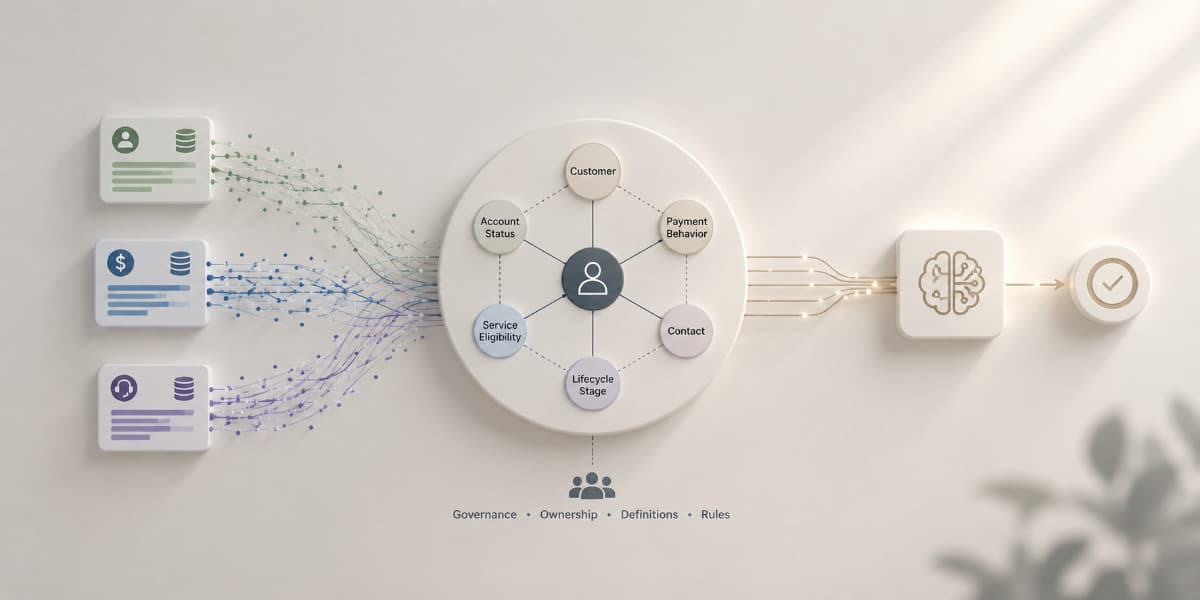
Strip away the model names and you are left with a governance pattern worth studying: same capability, different permissions, access gated by how much the provider trusts the user.
Every business deploying AI internally is converging on the same problem from the other direction. The model that can draft a contract can also misread one. The agent that can reconcile your books can also move money. The assistant that can query your customer database can also export it. As these tools get more capable, "give everyone the most powerful version" stops being a convenience and starts being a liability.
Anthropic's answer is instructive because it is not "make the model refuse more." A model that refuses too often is a model people route around. Their answer is graceful degradation. The powerful path stays open for the small number of users and tasks that genuinely need it, and everyone else is served a safer version that still does the job. The friction lands where the risk is, and nowhere else.
For leaders, the takeaway is not about Fable or Mythos specifically. It is that access control, fallback behavior, and audit logging are becoming first-class design decisions in AI deployment, not afterthoughts bolted on once something goes wrong. The question is shifting from "which model do we buy" to "who in our organization gets which version of it, and what happens when they reach for something they should not."
The Capability That Justifies the Caution
The safeguards only make sense because the underlying model is genuinely a step up. A few of the concrete claims from the announcement and surrounding reporting:
Software engineering. Stripe reported that the model migrated a 50-million-line Ruby codebase in a single day, work the company estimated would have taken a team more than two months. On SWE-bench Pro, a test of difficult engineering tasks, Anthropic's system card puts Mythos 5 at 80.3 percent and Fable 5 at 80 percent, against 69.2 percent for Anthropic's own Opus 4.8 and 58.6 percent for OpenAI's GPT-5.5.
Long-horizon autonomy. This is the quieter breakthrough. Given file-based memory, the model's performance on extended, multi-step tasks improved roughly threefold over Opus 4.8 in Anthropic's testing, and it completed work with fewer steps. It also finished the game Pokémon FireRed using vision alone, without the helper tools earlier models needed. The signal for business is that AI is getting better at the long, messy, multi-stage workflows that real operations are made of, not just the one-shot prompts.
Knowledge work. The model posted the highest score Anthropic has recorded on Hebbia's finance benchmark and showed strong results on document reasoning and chart interpretation, the analytical grunt work that fills knowledge-worker days.
A note on where these numbers live, and a habit worth keeping: Anthropic's announcement page leans on qualitative "state of the art" language and customer testimonials, while the hard figures sit in the 319-page system card published alongside it. The results above come from that document. It is worth the discipline, because secondhand coverage of these launches routinely blurs the details. Several outlets reported a single "80.3 percent" without noting that it belongs to Mythos 5, with Fable 5 a step behind at 80, and at least one cited a "93.9 percent" that actually belongs to the older Mythos Preview, not either new model. Before a number lands in a strategy deck, go to the primary report.
The Economics Shifted Too
Capability is half the story. Price is the other half.
Both models are priced at 10 dollars per million input tokens and 50 dollars per million output tokens. Anthropic notes that is less than half the cost of the earlier Mythos Preview. When frontier capability and falling prices arrive together, the calculation that matters most for businesses is the cost per finished task, not the cost per token. A model that is twice as cheap and finishes work in fewer steps compounds in your favor twice over.
Fable 5 is available globally as of June 9 and was offered free on Pro, Max, Team, and Enterprise plans through June 22 before moving to credit-based access. Mythos 5 remains restricted, initially to partners in Project Glasswing, an Anthropic collaboration with the US government to put these models in the hands of cyber defenders, which the company says is expanding to roughly 150 organizations across more than fifteen countries.
What Honra Sees in This
We read this release less as a product launch and more as a preview of how governed AI deployment is going to look.
Three things stand out for the organizations we work with:
First, treat access as a design decision. The most capable model is not automatically the right default for every seat in your company. Decide deliberately who needs the powerful version, where a safer fallback is the better choice, and what gets logged when someone reaches past their lane. Anthropic built that distinction into the product. Inside your own walls, you have to build it into your policy.
Second, fallback beats refusal. A system that simply blocks people teaches them to find workarounds, often less safe ones. A system that serves a safer-but-capable alternative keeps work flowing while containing risk. That principle applies whether you are buying a model or designing an internal AI workflow.
Third, the economics keep moving in favor of doing more. Frontier capability at half the prior price, finishing tasks in fewer steps, lowers the bar for which processes are worth automating. Work that was too expensive to hand to AI a year ago is worth a second look today.
The headline will be that Anthropic shipped its most powerful public model yet. The more durable lesson is the one underneath it. As these systems get stronger, the hard question is no longer how capable the model is. It is how thoughtfully you decide who gets to use that capability, and what happens when they reach for more than they should.
Sources
Claude Fable 5 and Claude Mythos 5 - Anthropic Official Announcement
Claude Fable 5 and Mythos 5 System Card - Anthropic (primary source for all benchmark figures)
Anthropic brings Mythos to the masses with Claude Fable 5 - VentureBeat
Anthropic Just Released Fable 5, a Mythos-Class Model - Inc.
Anthropic releases Claude Mythos-level model - Axios
Anthropic releases a version of its vaunted Mythos model to developers - Fast Company